Dry ice blasting explained: how it works and what it removes
Dry ice blasting is often described as a dry, low-residue alternative to pressure washing, chemical cleaning and conventional abrasive blasting. It can remove grease, production residue, adhesives and other build-up without adding water or leaving spent blasting grit behind.
That does not mean it is the right answer for every surface or contaminant. The results depend on the material being cleaned, how strongly the contamination is bonded, the air supply, pellet size, nozzle and blast settings. A test area and a clear waste-control plan are essential.
This guide explains how dry ice blasting works, what it can remove and when another cleaning method may be more suitable.
What is dry ice blasting?
Dry ice blasting is a cleaning process that propels solid carbon dioxide pellets or particles through a nozzle using compressed air. The stream is directed at unwanted material on a surface, such as grease, adhesive, carbon deposits or production residue.
Unlike sand, garnet or other conventional blast media, dry ice changes directly from a solid into carbon dioxide gas. This change is called sublimation. It means the dry ice does not remain as spent media after impact.
The loosened contamination does remain. Grease, paint flakes, soot and other removed material must still be collected, contained and disposed of appropriately, particularly when the contaminant is hazardous.
How does dry ice blasting work?
The cleaning action is produced by three effects working together.
1. Impact from accelerated particles
Compressed air accelerates the dry ice through the blast hose and nozzle. When the particles strike the contamination, the impact helps break its grip on the underlying surface.
The operator can adjust factors such as blast pressure, dry ice feed and nozzle selection to suit the task and equipment. Higher pressure is not automatically better. Sensitive materials and components may require a gentler setting and careful testing.
2. Rapid cooling
Dry ice is approximately minus 78 degrees Celsius. Its contact with the contamination causes rapid local cooling. Some deposits contract, become brittle or lose adhesion more readily than the material underneath.
This effect varies between contaminants and substrates. A coating that releases easily from metal may respond differently when bonded to timber, plastic or a delicate finish.
3. Sublimation and expansion
On impact, the dry ice changes from solid carbon dioxide into gas. This rapid expansion helps lift already weakened material away from the surface. The combined impact, cooling and expansion create the cleaning effect.
Call 2 Hire supplies Cryonomic equipment, whose explanation of the process notes that contaminants such as rubber or plastic residue, release agents, dirt and some paint can be loosened before the dry ice sublimates. You can view the available dry ice blaster hire option for more information.
What does dry ice blasting remove?
Dry ice blasting can remove many surface contaminants, but suitability should always be confirmed through inspection and a controlled test patch.
Oil, grease and lubricants
The process is commonly used to remove oily build-up from machinery, tools, production equipment and metal components. Because it does not introduce water, it can be useful where washing and drying would add downtime or create runoff.
Loose residue still needs to be captured. Heavy pools of grease may be scraped or vacuumed first so the blaster is used for the remaining film and difficult areas.
Adhesives, labels and sealant residue
Dry ice can embrittle and loosen some glues, labels, tapes and sealant residues. Results depend on the adhesive chemistry, thickness and substrate. Multiple passes or a different cleaning method may be needed for strongly bonded or flexible materials.
Carbon, soot and baked-on deposits
Carbon deposits, soot and some baked-on production residues can respond well to dry ice blasting. Typical applications include industrial equipment, ovens, printing and packaging machinery, moulds and manufacturing components.
Fire and smoke remediation requires more than visible cleaning. Soot can contain hazardous substances and travel into concealed areas, so specialist assessment, containment, respiratory controls and post-cleaning verification may be necessary.
Mould-release agents and manufacturing residue
Dry ice blasting is widely used on moulds, dies and production equipment to remove release agents, resin residue, rubber, plastic build-up, oils and dust. Its relatively gentle action can help preserve detailed or finished tooling surfaces when the settings are appropriate.
Paint and coatings
Dry ice blasting can remove loose, brittle, peeling or poorly bonded paint and some coatings. It may also remove overspray and prepare a surface by taking away oils and particulate contamination.
It is not automatically an efficient method for stripping every coating. Thick, flexible or strongly bonded paint may require more time or a more aggressive process. If the objective is complete coating removal and creation of a surface profile, abrasive blaster hire may be more suitable.
Food and production residue
Dry ice blasting can remove oils, fats, crumbs and hardened production residue from suitable food-processing and packaging equipment. However, cleaning does not automatically equal sanitising or sterilising. The site's hygiene plan, equipment manufacturer requirements and relevant food-safety procedures still apply.
Surface mould and biological build-up
The process can physically remove visible mould growth from some surfaces without adding moisture. It does not correct the leak, condensation or humidity that caused the growth. Disturbing mould can spread spores, so affected areas may require specialist containment, air control and verification rather than routine equipment cleaning.
What dry ice blasting does not remove well
Dry ice blasting is generally less effective where cleaning depends on cutting into or profiling the base material. It may not be the best choice for:
- Heavy rust, mill scale and deep corrosion
- Creating a surface profile before certain protective coatings
- Deep stains absorbed into porous materials
- Thick or strongly bonded coatings that require aggressive removal
- Pitting, structural damage or deterioration within the substrate
- Hazardous contamination without suitable containment and disposal controls
It may expose corrosion by removing the grease, dirt or coating covering it, but it does not repair the metal. A test area helps determine whether dry ice blasting will achieve the required finish or whether another method should be selected.
Dry ice blasting compared with other cleaning methods
| Method | Cleaning action | Best suited to | Main considerations |
|---|---|---|---|
| Dry ice blasting | Impact, rapid cooling and sublimation | Grease, production residue, adhesives, soot and cleaning around suitable machinery | Requires compressed air, dry ice, ventilation and collection of removed contamination |
| Pressure washing | Pressurised water | Dirt, mud, mould and grime on suitable exterior surfaces | Creates water and runoff; unsuitable for moisture-sensitive areas |
| Abrasive blasting | Hard blast media removes or profiles material | Rust, scale, heavy coatings and surface preparation | More aggressive; produces spent media and dust that require control |
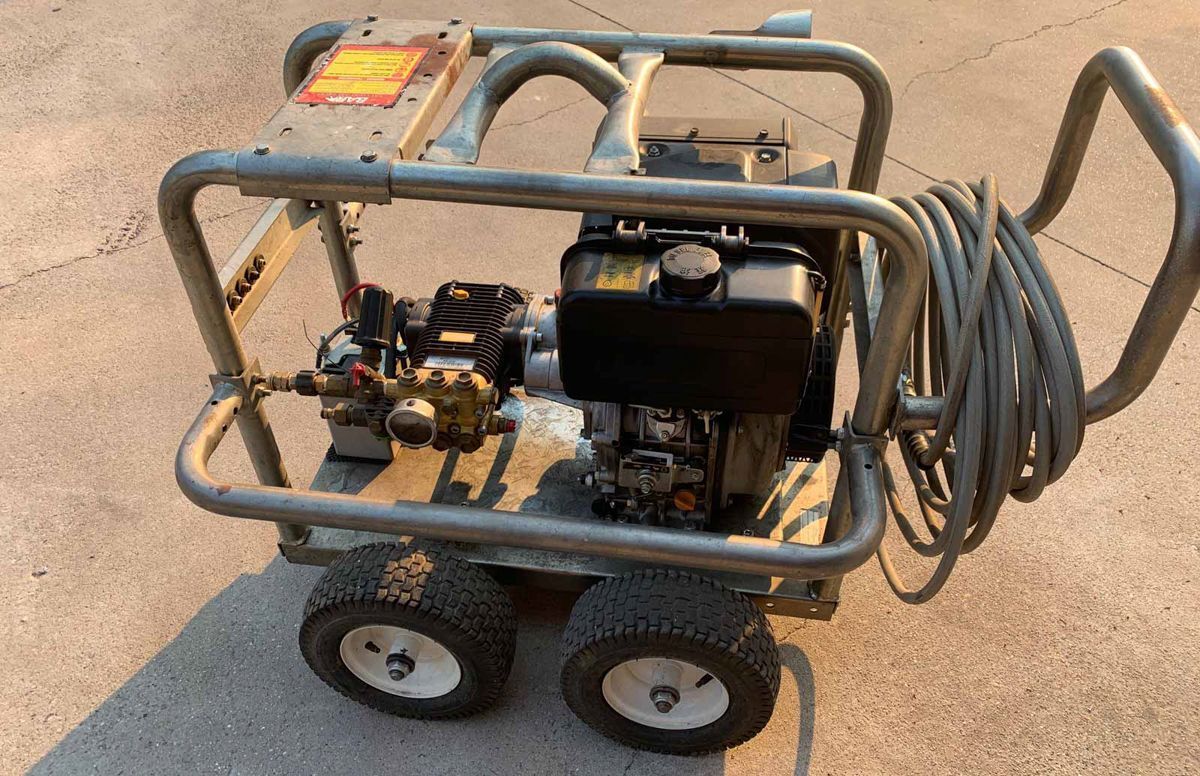
For outdoor surfaces where water and drainage can be managed, high-pressure cleaner hire may offer a simpler option. For corrosion and heavy coating removal, abrasive blasting may deliver the required profile. Dry ice blasting is particularly useful where water, chemical residue or added blast media would complicate the job.
What equipment does dry ice blasting require?
A typical setup includes:
- A compatible dry ice blasting machine
- A compressed-air supply with suitable pressure, flow and air quality
- Fresh dry ice in the form required by the machine
- The correct hose, gun and nozzle for the application
- Ventilation and carbon dioxide monitoring where the risk assessment requires it
- Barriers, containment and collection equipment for removed material
- Personal protective equipment suited to cold, noise, flying debris and the contaminant
Air demand varies between machines and settings. Confirm compressor capacity, hose compatibility, available power, site access and the dry ice supply before the hire begins. Browse the wider equipment hire range if the project also needs compressed-air or supporting equipment.
Is dry ice blasting safe?
Dry ice blasting involves high-pressure air, extreme cold, noise, flying particles and carbon dioxide gas. It must be planned and operated by people who understand the equipment and site hazards.
Carbon dioxide is colourless and can accumulate without an obvious warning. The US National Institute for Occupational Safety and Health notes that exposure can cause headache, dizziness, breathing difficulty, unconsciousness and asphyxiation. Because carbon dioxide is heavier than air, it can collect in pits, tanks, basements and other low or enclosed spaces.
Safe operation may require mechanical ventilation, atmospheric monitoring and confined-space controls. Never assume that an open doorway provides enough airflow. Follow the operating manual, safety data information and workplace risk controls.
Operators should also:
- Wear suitable eye, face, hearing, hand and body protection
- Use insulated gloves when handling dry ice
- Never direct the blast stream at a person or animal
- Keep unprotected people outside the work area
- Inspect hoses, couplings, nozzles and safety controls before use
- Isolate machinery and electrical equipment according to the site's safe system of work
- Identify the removed contaminant and choose suitable containment and disposal methods
- Never store dry ice in a sealed container
How to decide whether dry ice blasting is suitable
Start with the required outcome rather than the cleaning machine. Ask:
- What exactly needs to be removed?
- What is the underlying material and finish?
- Is moisture prohibited or difficult to manage?
- Does the surface need cleaning only, or must it also be profiled?
- Is the contamination hazardous?
- Can carbon dioxide and airborne debris be controlled safely?
- Is there enough compressed-air capacity?
- How will loosened material be collected and disposed of?
A small trial area can confirm the nozzle, pressure, feed rate, cleaning speed and likely surface result before committing to the full job.
Frequently asked questions
Does dry ice blasting leave any waste?
The dry ice sublimates and does not remain as spent blasting media. The removed contaminant still remains and may need to be swept, vacuumed, contained or handled as regulated waste.
Will dry ice blasting remove rust?
It can remove material covering the rust, but it is generally not the first choice for heavy corrosion or creating a coating profile. Abrasive blasting is often better suited to those outcomes.
Can dry ice blasting damage a surface?
Any blasting process can cause damage if the settings, nozzle or technique are unsuitable. Dry ice is generally less abrasive than conventional blast media, but delicate finishes, brittle materials and bonded layers should always be tested first.
Can it be used on electrical equipment?
The process does not add water and dry ice itself is non-conductive. That does not make every electrical cleaning task automatically safe. Equipment isolation, stored energy, arc-flash risks, contamination and manufacturer requirements must be assessed by competent people.
Does dry ice blasting kill mould or sterilise equipment?
Do not assume that visible residue removal proves sanitisation, sterilisation or complete mould remediation. These outcomes require an appropriate cleaning plan, controls and verification for the specific environment.
Choose the cleaning process around the required result
Dry ice blasting works by combining particle impact, rapid cooling and sublimation. It is well suited to many oils, greases, adhesives, production residues, soot deposits and some coatings, particularly where water or spent abrasive media would create extra problems.
For project-specific equipment information, explore Call 2 Hire's dry ice blaster hire. To confirm machine availability, compressed-air requirements and whether dry ice blasting suits your surface, contact the Call 2 Hire team.